Dental impressions have long been part of everyday dentistry, but digital dental impressions are now changing how dental professionals capture patient information, communicate with laboratories and approach digital workflows.
Intraoral scanners use a handheld device to capture three-dimensional images of a patient’s teeth and oral structures. These images are combined into digital dental impressions that clinicians can review on screen, check and rescan where necessary.
For patients, this offers an alternative to traditional impression trays, which can be uncomfortable, particularly for those with a sensitive gag reflex. Digital models also give clinicians a visual tool to help explain treatment options and discuss the next steps with patients.
Digital dental impressions can simplify communication between dental practices and laboratories. Rather than physically transporting impressions, clinicians can send digital files electronically, allowing the laboratory to receive the information and begin the next stage of its workflow without waiting for a physical impression to arrive.
Depending on the scanner and software, files can be exported in formats such as STL, OBJ and PLY for use with compatible design and manufacturing systems.
Accuracy remains an important consideration. Results depend on the scanner, scanning technique, clinical conditions and how the digital data is processed. When integrated effectively into the wider workflow, digital scanning can reduce the need for physical impressions and improve the exchange of information between the practice and laboratory.
Available through DDL Dental, the Aidite Cameo Rapid 3 intraoral scanner combines scanning technology with software features designed to support digital dentistry.
According to the manufacturer’s listed specifications, the scanner offers accuracy of 15 μm for a single crown and 40 μm for a full arch, with a scan depth of 15 mm.
Its features include AI-assisted scanning to filter unwanted soft tissue, clinical tools for checking bite and undercuts, and margin-line definition. For implant workflows, scan-body matching supports the alignment of scan-body data during the digital process.
The Rapid 3 also supports STL, OBJ and PLY file exports, as well as one-click addition of a 3D printing base. Practical features include automatic anti-fogging, a lightweight 240 g handpiece and scanner tips rated for up to 100 autoclave cycles.
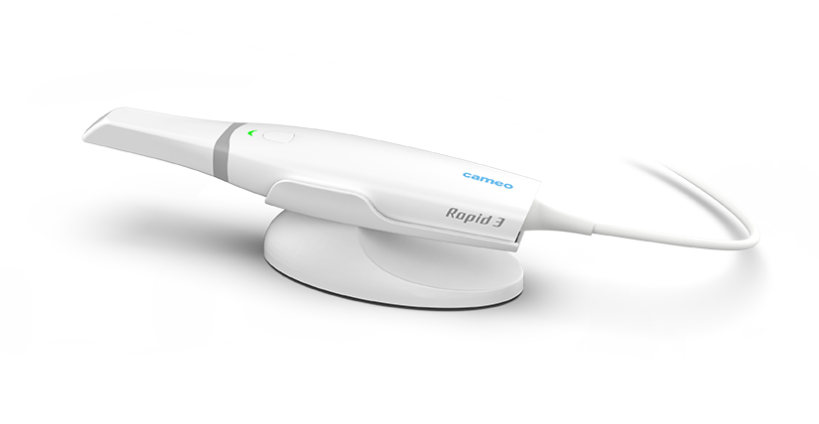
Together, these features support digital data capture, clinical assessment, and transferring scan files to compatible laboratory workflows.
Scanning is one part of a wider process that can include digital design, 3D printing or milling, and post-processing. Each stage relies on suitable equipment, compatible materials and appropriate techniques.
For dental practices and laboratories, adopting digital scanning involves more than purchasing a scanner. Training, software compatibility and integration with existing processes are also important considerations.
As digital technologies continue to develop, intraoral scanning provides dental professionals with another way to capture, share and work with clinical information.
Explore DDL Dental’s digital dentistry solutions to find equipment and technologies that support your practice or laboratory.